


BioThrust ComfyCell Benchtop

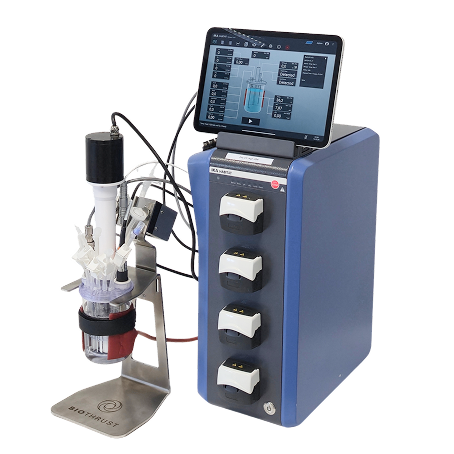
Key Advantages

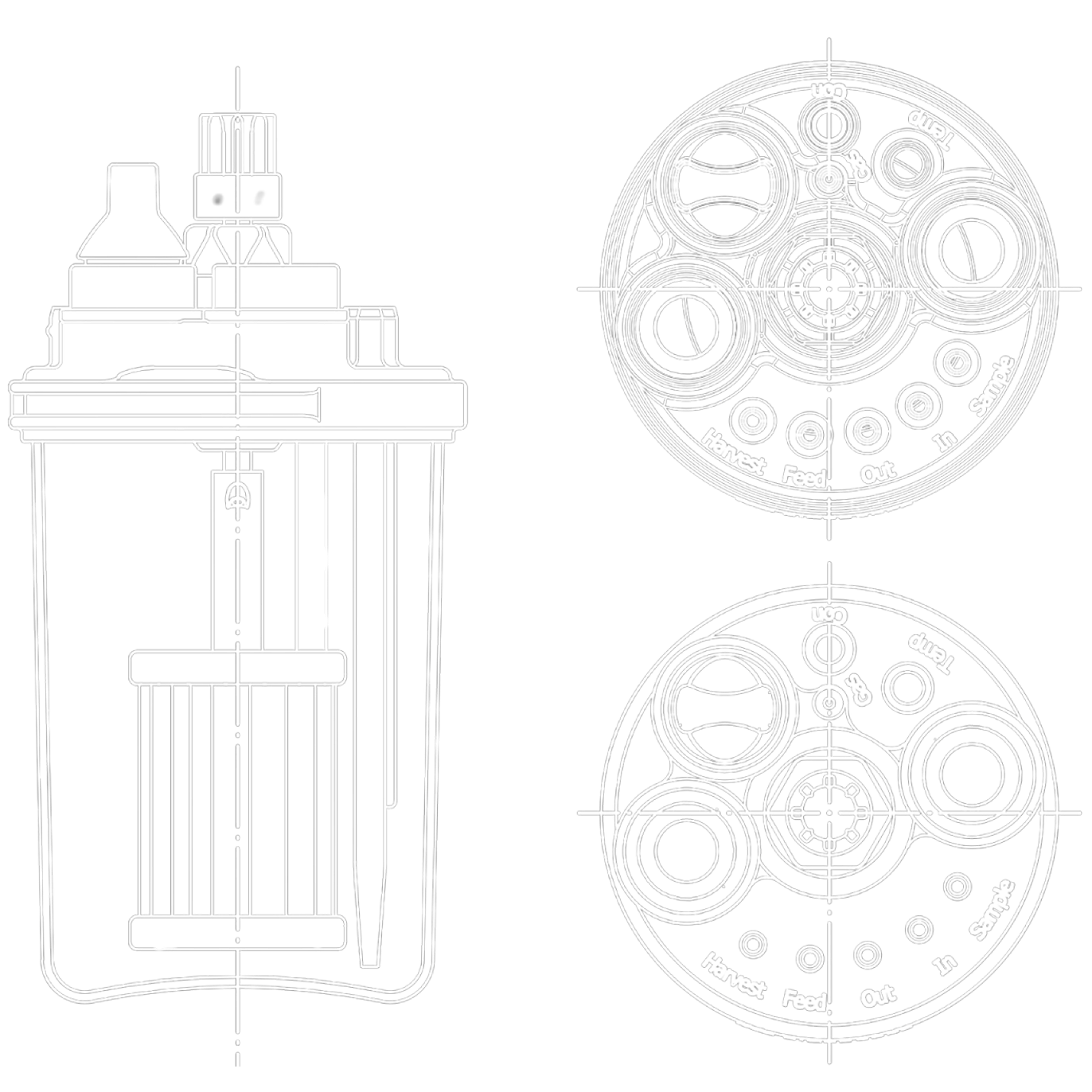
World record cell densities for stem cells, CHO cells and more thanks to our revolutionary Membrane Stirrer.

Multiple PG13.5 ports to leverage best-in-class sensors and perfusion systems at any reactor volume

One intuitive control system which supports all of our bioreactor vessel types and volumes (300mL to 10L)

All product-contact materials meet or exceed medical grade requirements










ComfyCell Benchtop vs. Other Bioreactors

Large Membrane Stirrer that creates laminar low-shear flow in all directions and avoids dead zones through CFD optimized flow design.

Small, high‑speed impellers that generate flow with pronounced shear peaks at blade tips, potentially stressing cells and leaving dead zones.

Large vertical wheel that creates gentle vertical flow and avoids dead zones by having a unique vessel shape. Limits transferability of process.

Static culture with near‑zero hydrodynamic shear, purely diffusive gassing with risk of gradients at higher cell densities and no monitoring.

Static multilayer flasks with mo hydrodynamic shear; mass transfer is diffusion‑limited, leading to nutrient and oxygen bottlenecks.

Rocking bag with wave‑induced mixing; overall low average shear but pronounced shear peaks at the wave front and walls - hard to scale.
Benchmarked kLa of up to 50 while avoiding gas bubbles & foam completely. Achieves 10x gas transfer of low-shear systems for high-density stem cell culture. Also has automatic CO₂ stripping.
High gas transfer only achievable via sparging which kills sensitive cells and causes foaming. For modern ATMPs, only headspace aeration feasible which severely limits oxygen transfer.
Very low gas transfer due to reliance on surface‑aeration. Increasing kLa requires complicated workarounds. Published kLa data based on simulated assumptions which do not hold up in real conditions.
Passive oxygenation through a gas‑permeable bottom membrane works well for small scales, but overall gas transfer remains limited for larger high‑density cultures due to planar limitations.
Static surface aeration only. Oxygen transfer is limited, leading to strong O₂ and CO₂ gradients between layers and limiting maximum viable cell density for the total planar system.
Wave bags can reach very high kLa through rocking‑induced surface renewal and headspace aeration, but this complicated setup is extremly complex to scale up.
Proven to be scalable from 300mL up to 200L, with up to 1000L possible depending on the desired processes' kLa requirements.
Without sparging, commercially viable cell culture of ATMPs is limited to between 2L and 10L. For classic bioprocessing, 1000s of liters are feasible with sparging in stainless steel tanks.
Due to limited gas transfer, commercially viable cell culture of ATMPs is limited to 2L working volume - larger volumes claimed up to 80L are based on oxygen transfer simulations that do not reflect reality.
Event the largest G-Rex 500M requires scale-out (parallel handling of several G-Rex systems) to supply clinical programs, leading to high FTE costs. Nevertheless, until scale-out it is a very efficient system.
Scales out, not up, by adding more multilayer units, leading to high footprint, high manual handling effort, and considerably quality differences between flasks. Only feasibly for early process work.
Available bag volumes can reach a few hundred liters, but complex rocking and aeration parameters mean that switching volumes or processes is time intensive and may take months to establish.
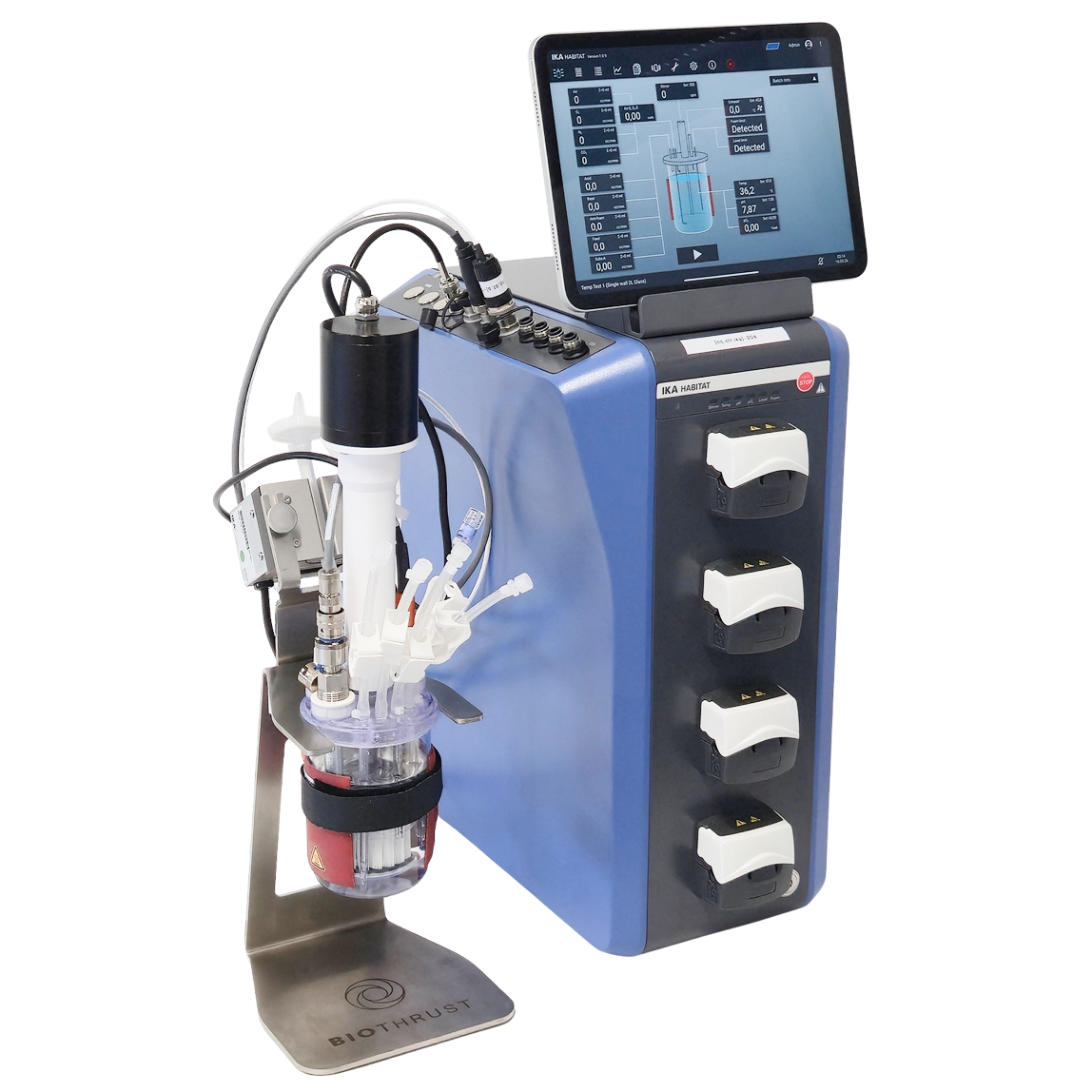
STR-like design of consumable allows for flexible accommodation of PAT. 300mL consumables have three PG13.5 ports, 2L+ consumables have four PG13.4 ports.
STR design allows for flexible accommodation of PAT. The majority of standard probes that fit in a STR bioreactor will also work with a BioThrust ComfyCell.
Basic inline sensors only as limited ports and unique vessel geometry constrain additional probes and external analytics tools. Flowcell may be required.
PAT integration is very limited. Static devices with no embedded inline sensors, so monitoring relies almost entirely on incubator read‑outs and offline sampling.
No options for integrated inline probes within the multilayer flasks, so process monitoring is limited to incubator parameters and labor‑intensive offline sampling.
Moderate selection of sensors with limited ports and unique bag geometry limiting non-vendor options. Flexibility of PAT integration heavily depends on vendor.
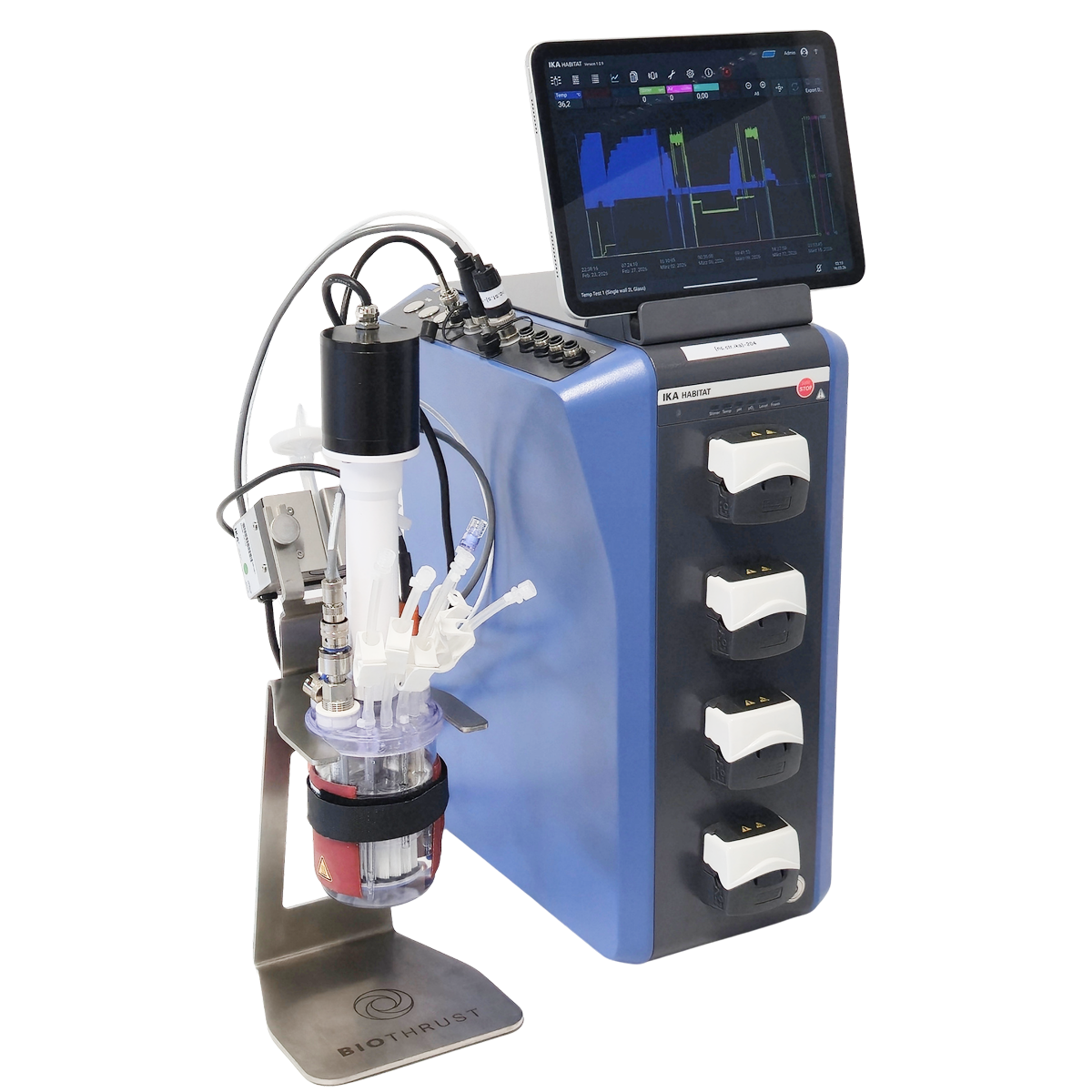
Supports a wide range of perfusion strategies (In-situ, ATF, TFF) and is the optimal system for high intensity cell culture as bubble-free aeration de-risks processes.
Supports a wide range of perfusion strategies (ATF, TFF, spin filters, internal settlers) and is a well established platform for high‑intensity perfusion.
Perfusion for automation is possible via external loops or internal filters, but the severely limited gas transfer makes high cell densities unachievable regardless.
Primarily a fed‑batch system as medium exchange is performed in discrete steps rather than continuous perfusion, which restricts control over culture conditions.
Designed for static or intermittent medium exchange only since implementing continuous perfusion across multilayer surfaces is technically cumbersome.
Can support pefusion processes and achieve high cell densities comparable to BioThrust ComfyCell, but set-up is considerably more complex.
BioThrust ComfyCell Benchtop Data & Benchmarks
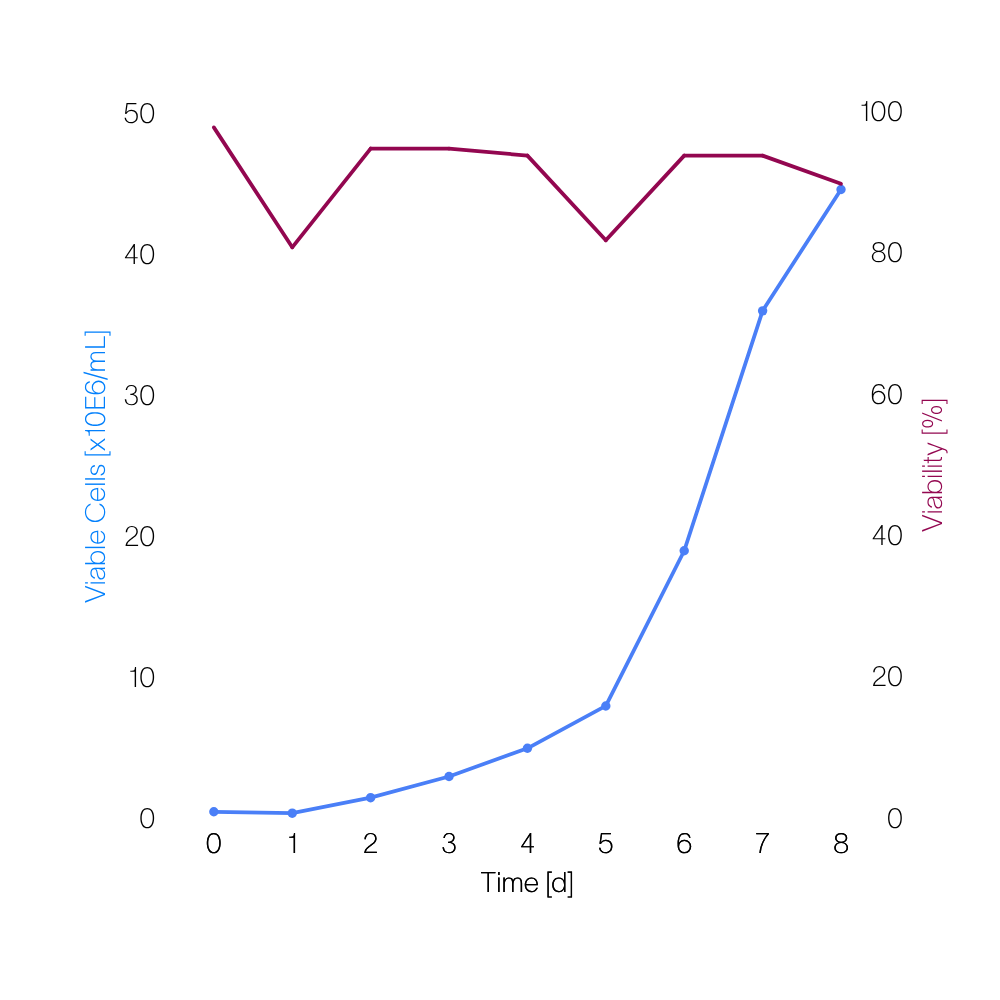
44 million iPSCs per mL in 300mL
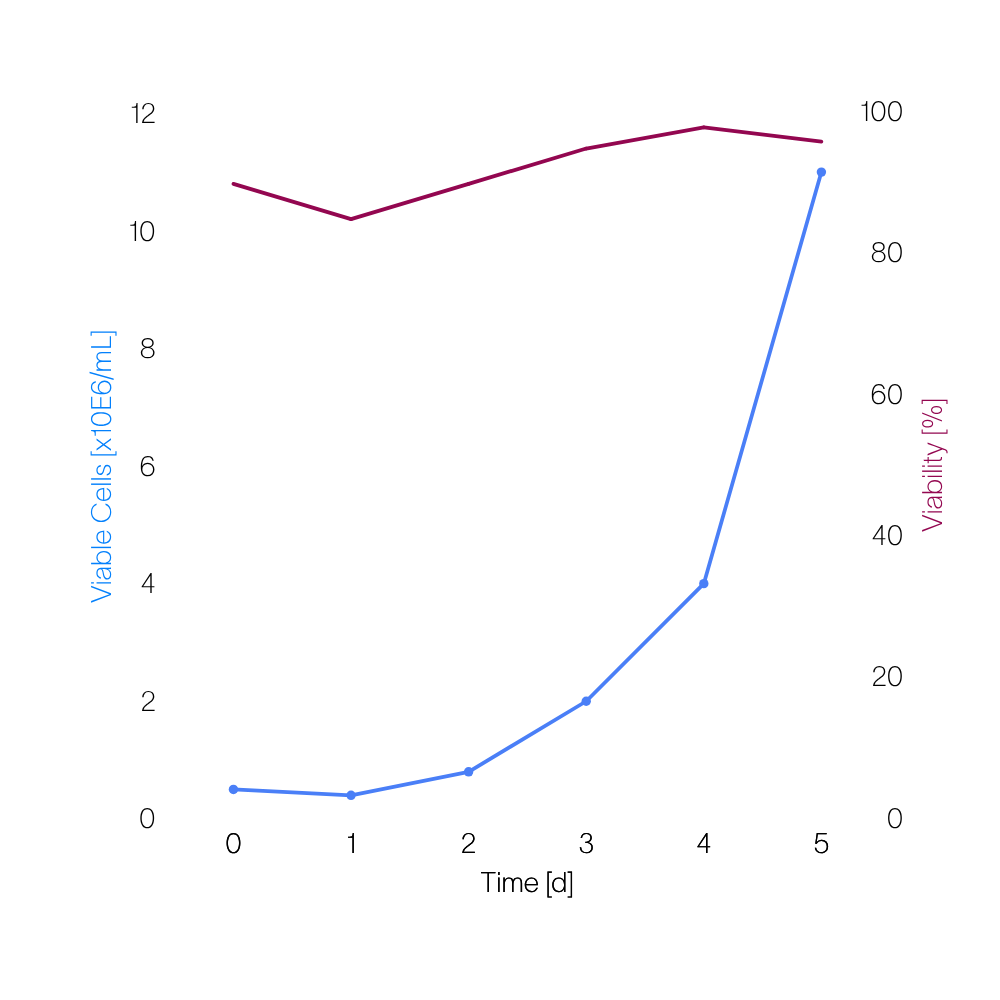
10.75 million iPSCs per mL in 2L
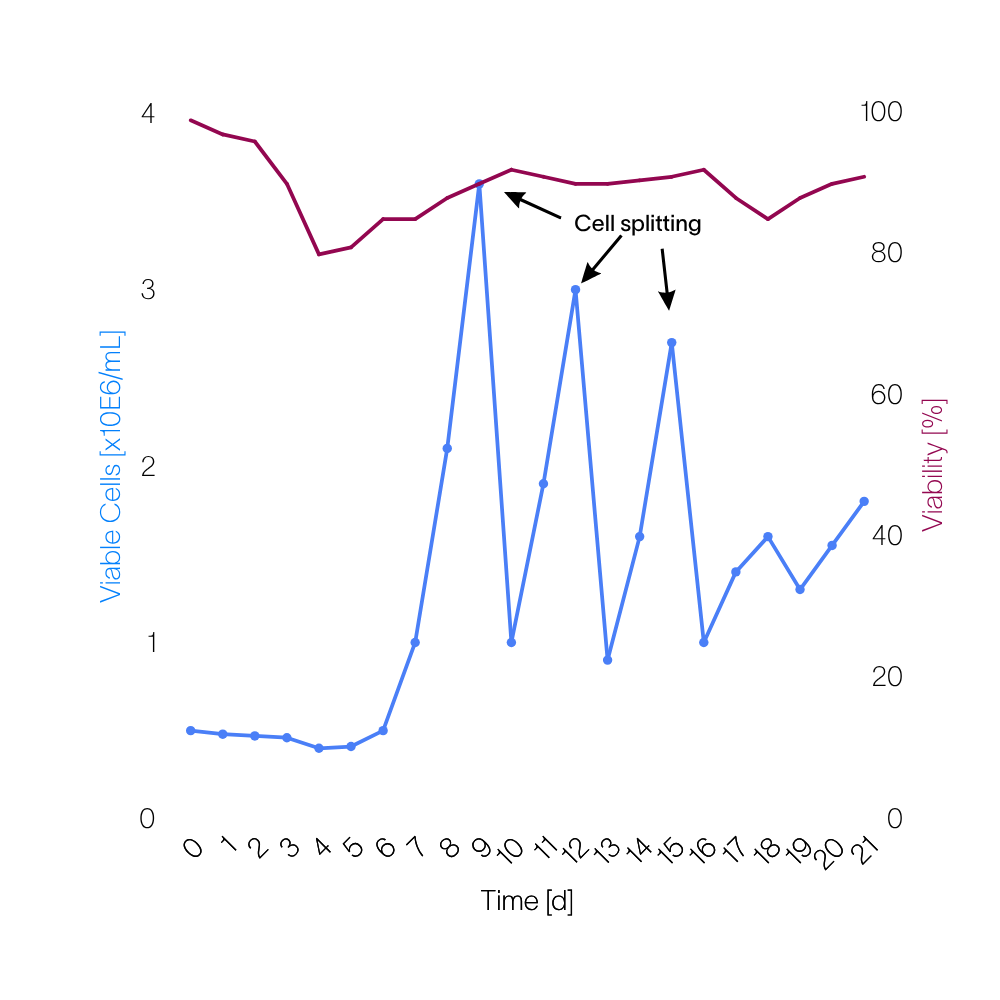
3.6 million NKs per mL at 300mL
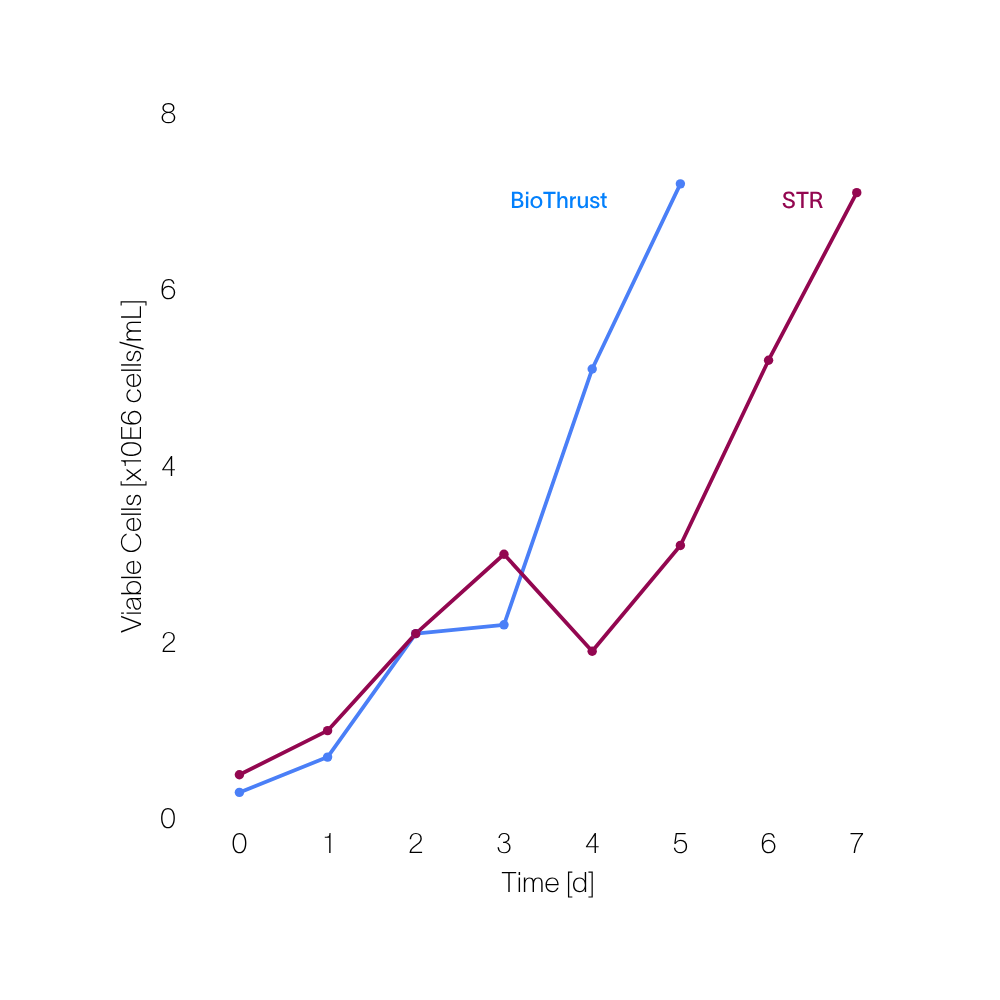
7.2 million T-Cells per mL in 300mL
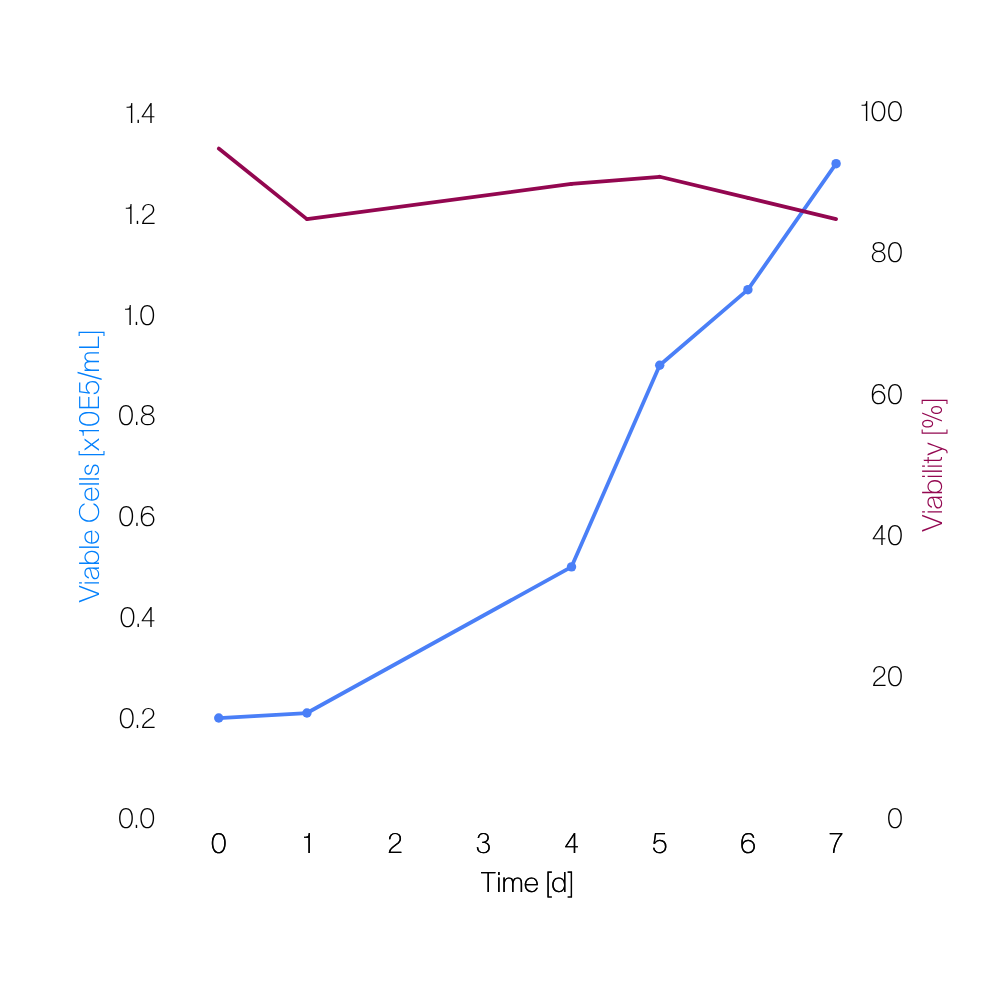
Human bm-MSC expansion in 300mL
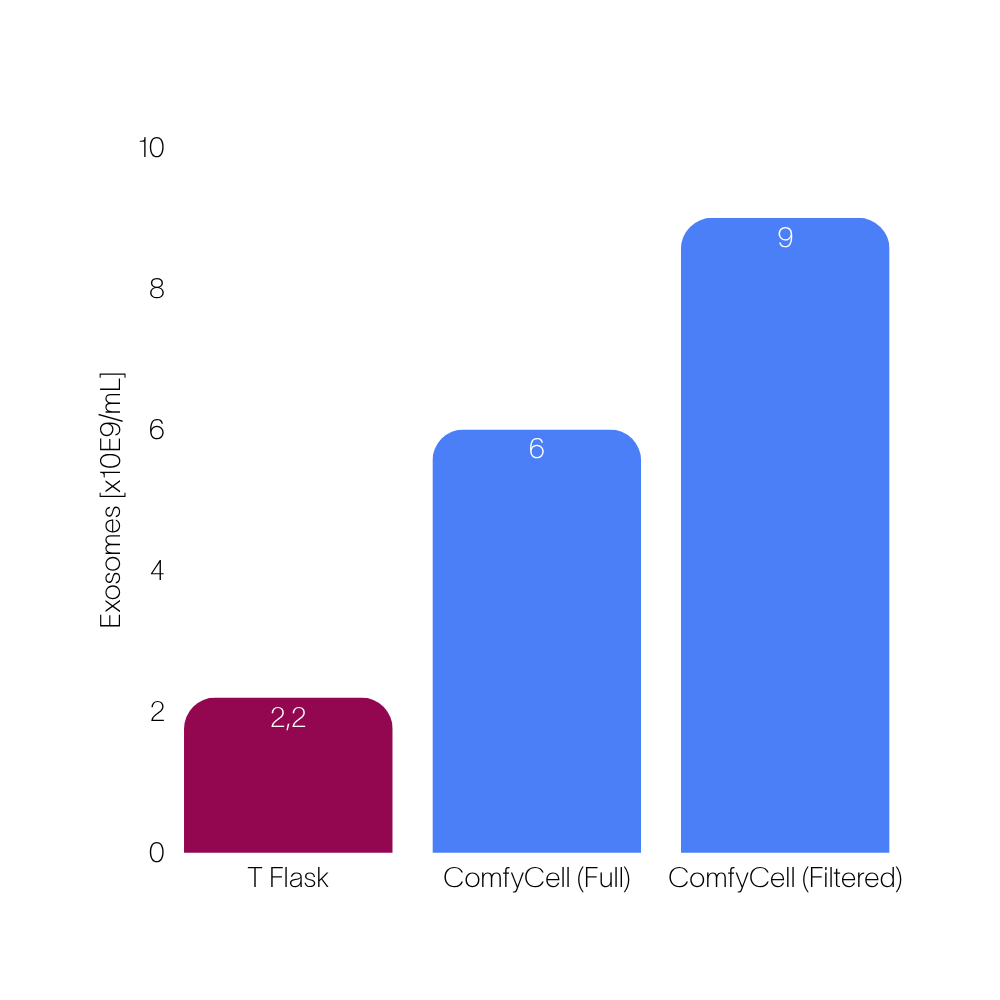
Up to 9 billion particles per mL at 300mL
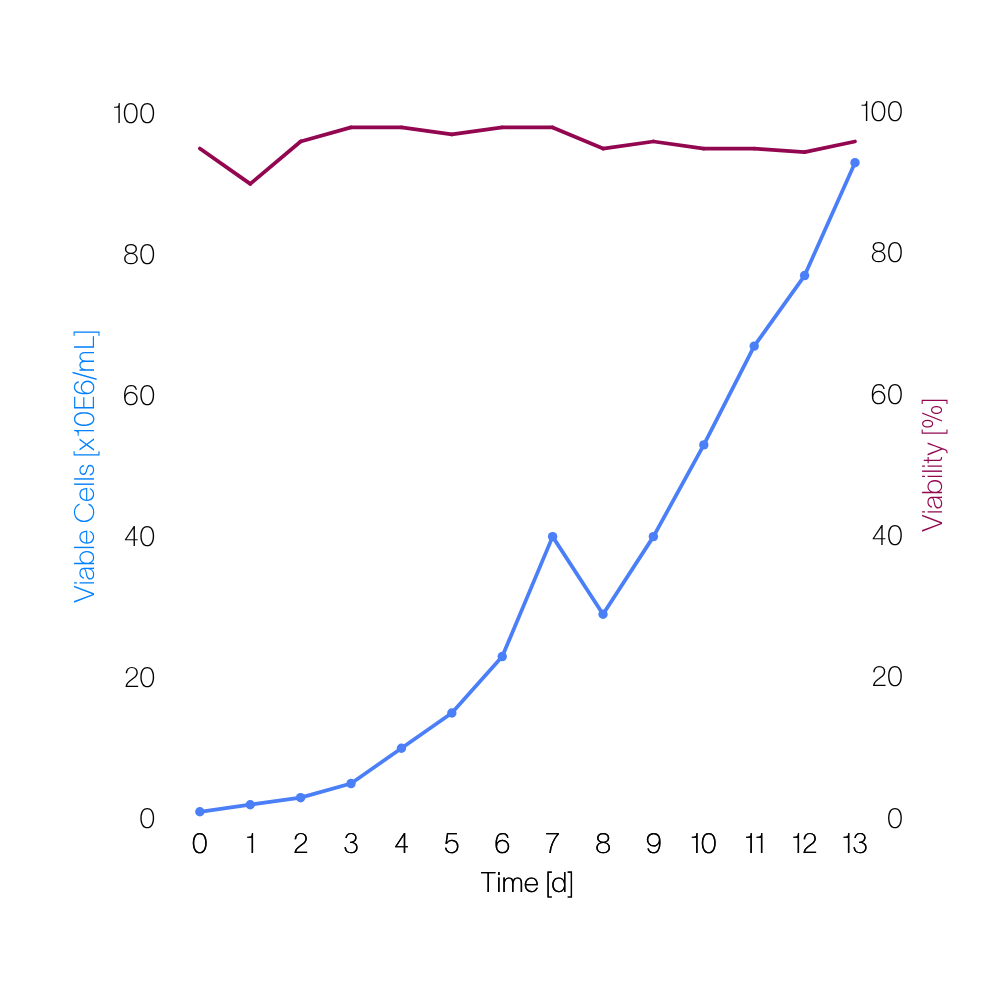
93 million cells per mL in 2L
258 million CHO cells per mL in 2L
Product Catalog & Technical Specs
| Category | Product | Part Number | Link |
|---|---|---|---|
| Control Units | ComfyCell Benchtop Controller (100-240VAC) | int-nc-ctr-ika | Request Quote |
| Single-Use Vessels | ComfyCell Benchtop Single-Use Vessel 300mL (Single-Cells) | int-c-su-0.3-1 | Request Quote |
| ComfyCell Benchtop Single-Use Vessel 300mL (Microcarriers) | int-c-su-0.3-2 | Request Quote | |
| ComfyCell Benchtop Single-Use Vessel 300mL (Aggregates) | int-c-su-0.3-3 | Request Quote | |
| ComfyCell Benchtop Single-Use Vessel 2L (Single-Cells/Microcarriers) | int-c-su-2-1 | Request Quote | |
| ComfyCell Benchtop Single-Use Vessel 2L (Aggregates) | int-c-su-2-2 | Request Quote | |
| Glass Vessels | ComfyCell Benchtop Glass Vessel Package 2L | int-nc-rv-2-rsp | Request Quote |
| ComfyCell Benchtop Glass Vessel Package 10L | int-nc-rv-10-rsp | Request Quote | |
| Membrane Stirrers | BioThrust MemStir 2L | int-c-rs-2 | Request Quote |
| BioThrust MemStir 10L | int-c-rs-10 | Request Quote | |
| Peripherals | ComfyCell Benchtop Stands & Peltier Element | - | Request Quote |
| ComfyCell Benchtop Motors | - | Request Quote |
| Features | Description |
|---|---|
| Size | 223 x 402 x 450 mm / 8.77 x 15.82 x 17.71 inch |
| Weight | 14 kg / 8.81 lb |
| Control and monitoring | 10.4-inch tablet |
| pH-Control | Base, Acid, CO2 |
| Stirring | Direct drive – Speed range depending on reactor size |
| Pumps | Flowrate min: 0.3mL/min |
| Flowrate max: 270mL/min | |
| Standard Sensors (Control Accuracy) | pH (±0.05 pH) |
| pO2 (±0.3 %sat) | |
| Temperature (±0.2 °C) | |
| Voltage & Frequency | 100 – 240 V, 50/60 Hz |
| Feature | 0.3L Single-Use Vessel | 2L Single-Use Vessel | 10L Single-Use Vessel |
|---|---|---|---|
| Ideal Working Volume | 150mL or 300mL | 1L to 2L | 5L to 10L |
| Size (WxDxH) | 85 x 85 x 125 mm | 140 x 140 x 240 mm | Coming Soon! |
| Inner diameter | 75 mm | 110 mm | Coming Soon! |
| Net weight | 0.4 kg / 0.88 lb | 0.9 kg / 1.98 lb | Coming Soon! |
| Stirring speed | 0 – 200 RPM | 0 – 150 RPM | Coming Soon! |
| Standard Sensors | pH, pO2, Temp | pH, pO2, Temp | pH, pO2, Temp |
| Optional Sensors | Glucose, RAMAN, Cell Mass, etc. | Glucose, RAMAN, Cell Mass, etc. | Glucose, RAMAN, Cell Mass, etc. |
| Total ports | 3 x PG13.5 | 4 x PG13.5 | 4/5 x PG13.5 |
| Perfusion | In-situ, Dip Tube, ATF, TFF | In-situ, Dip Tube, ATF, TFF | In-situ, ATF, TFF |
| Sterilization | Autoclaving | Autoclaving | Autoclaving |
| Feature | 2L Single-Use Vessel | 10L Single-Use Vessel |
|---|---|---|
| Type | Single or Double Wall | Single or Double Wall |
| Ideal Working Volume | 1L to 2L | 5L to 10L |
| Size (WxDxH) | 210 x 210 x 420 mm | 230 x 230 x 490 mm |
| Inner diameter | 130 mm | 190 mm |
| Net weight | 10.55 kg / 23.26 lb | 21.9 kg / 48.28 lb |
| Stirring speed | 0 – 300 RPM | 0 – 150 RPM |
| Standard Sensors | pH, pO2, Temp | pH, pO2, Temp |
| Optional Sensors | Glucose, RAMAN, Cell Mass, etc. | Glucose, RAMAN, Cell Mass, etc. |
| Total ports | 4 x PG13.5 | 4 x PG13.5 |
| Perfusion | ATF, TFF | ATF, TFF |
| Sterilization | Autoclaving | Autoclaving |

Demo Version Available!
Want to try our system to make the most informed decision? Depending on your application we offer in-kind collaboration agreements, lease-to-buy rental demos or we can run your process in our in-house S1-rated lab to check compatibility with our technology. Get in touch!
Need CDMO services?
Contact Us!
Our bioprocess experts can develop your process in our fully S1 certified lab and then transfer the protocol and train operators at your site.
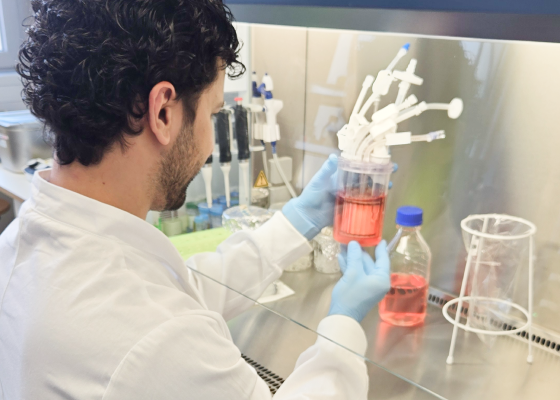
Download Benchtop Manual & Quick Start Guide
Access the Benchtop's documents following the links below.


